Gig driving looks different depending on which app you open. Walmart Spark puts you in a different lane than food delivery, and that difference matters more than people think when choosing where to spend their time.
The whole model is straightforward: customers order groceries online, Walmart bags them, and you deliver. No shopping lists, no restaurant waits in most cases, and no wondering what the order contains. That changes the job considerably.



I think Spark gets overlooked by drivers who assume it runs exactly like DoorDash or Uber Eats. The grocery delivery format creates a predictable pickup structure that fast-food apps rarely offer, and that alone can be worth paying attention to.
The honest question is whether Walmart Spark pays well enough to justify the miles. Let’s work through that from the actual numbers.
How Walmart Spark Works for Drivers
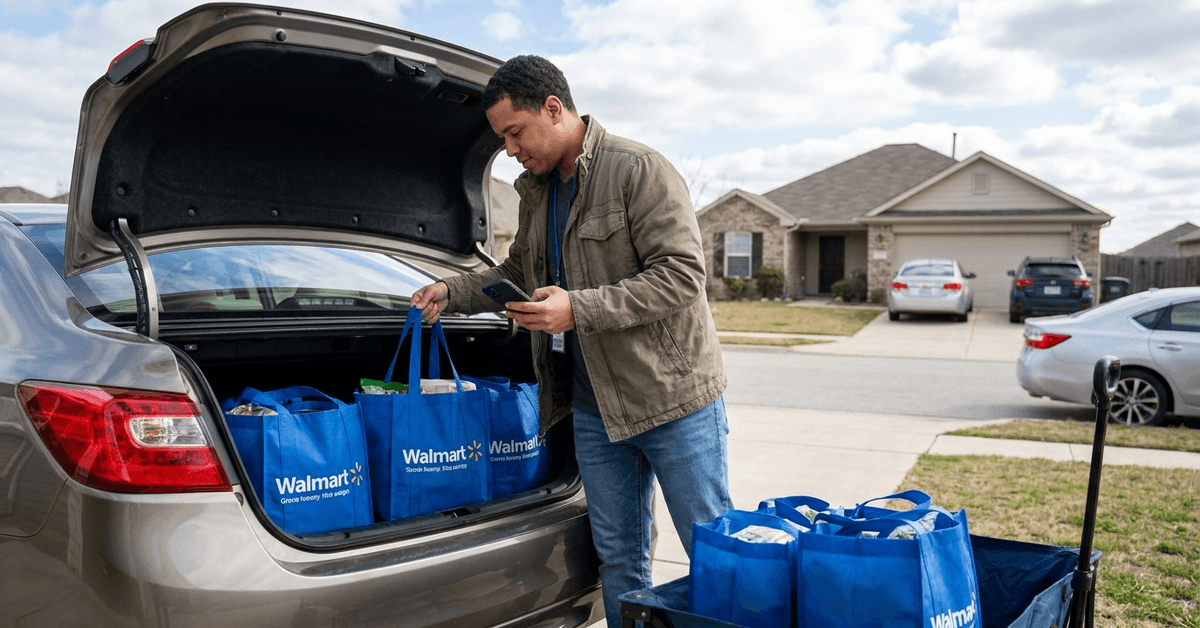
Walmart Spark Driver is a last-mile delivery platform. Walmart customers place orders online, store staff bags those orders, and independent drivers pick up and deliver them.
Drivers are independent contractors, not Walmart employees, so there are no benefits, no set hours, and no guaranteed minimum income.
Access to the platform depends on your location. Walmart works with third-party logistics partners in some markets, so approval processes vary by region.
The standard requirements include being at least 18 or 21 depending on state law, holding a valid driver’s license, passing a background check, and having a smartphone and a reliable vehicle with current insurance.
What the Pay Structure Looks Like
Base pay per delivery varies by region, delivery type, and demand. A standard single-stop order typically pays $8 to $12.
Larger or more urgent deliveries, batch orders covering multiple drop-offs, and express assignments can push that figure to $20 or more per trip. Drivers keep 100% of customer tips, which can add meaningfully to the total.
The pay-before-you-accept model is one of Spark’s better design choices. You see the estimated earnings before committing to a trip, which lets you skip low-paying runs without wasting time.
The Three Main Delivery Types
Not all Spark orders work the same way, and the type you get affects both pay and time commitment.
- Shopping and Delivery: You personally pick items from the store before delivering. Available in select markets. Higher pay reflects the extra work involved.
- Express Delivery: Time-sensitive orders with shorter delivery windows and higher rates. Less waiting at the store, more pressure on the clock.
- Batch Orders: Single pickup, up to four delivery stops. Total pay per trip goes up, but route planning becomes your responsibility.
Batch orders are worth thinking about carefully. The per-trip number looks great until you realize four stops in different directions can eat an hour. Map the route mentally before accepting.
What Actually Affects Your Take-Home Pay
There’s a version of this conversation that just lists “work more hours, earn more money,” and I find that framing almost useless. The real levers are more specific.
Timing Your Shifts Around Demand
Weekend afternoons, Friday evenings, and the days just before major holidays consistently produce more orders. Traffic from other drivers increases during these windows too, so there is competition.
Off-peak hours sometimes carry surprise bonuses when Spark needs to fill gaps, so testing morning shifts mid-week can reveal rate bumps that peak-hour drivers never see.
Route Efficiency Over Raw Hours Logged
Driving three hours in a dense suburban area often outperforms six hours in a spread-out rural zone once you factor in fuel costs.
Longer trips pay more per delivery, but the math on gas and vehicle wear changes the real number quickly. Drivers who track cost-per-mile against earnings find the sweet spot faster than those going purely by total payout.
Tips as a Real Variable, Not a Bonus
I was surprised to find that Spark customers tip at a rate that can meaningfully swing weekly income. The platform keeps customers connected to the delivery and prompts them to rate the experience.
Prompt communication, confirming arrival times, and accurate deliveries at the right door do influence tip behavior. That said, no amount of professionalism guarantees anything, so counting on tips as baseline income is a mistake.
Promo Incentives During Slow Weeks
Walmart periodically runs completion-based bonuses: finish a set number of deliveries within a given period and earn an extra payment. These promotions appear and disappear without much notice.
Drivers who check the app daily during slow stretches catch these more often than those who log in only when they want to work.
The Costs That Eat Into Earnings
Vehicle Wear Gets Underestimated
Gig drivers consistently underestimate what regular delivery mileage costs per year. Oil changes, tire replacements, and brake wear accumulate faster on a car doing daily delivery loops than one commuting occasionally.
Budgeting for maintenance proactively rather than waiting for something to break is the difference between profitable driving and a month where one repair wipes out four weeks of earnings.
Tracking Expenses for Tax Time
Spark drivers are independent contractors, which means the IRS treats your delivery income as self-employment income. The deductions available are real and add up:
- Mileage: The standard IRS mileage deduction rate for 2026 applies to every work-related mile
- Phone and data plan: The portion used for the app and navigation
- Vehicle maintenance and supplies: Oil changes, car washes, phone mounts
- Any other direct business expense tied to running your delivery operation
Without records, those deductions disappear. A mileage tracking app running in the background from day one prevents a painful tax season scramble.
The IRS gig-economy tax center provides plain-language guidance on the specific obligations of independent contractors.
Spark vs. Other Delivery Apps: An Honest Comparison
Drivers who work multiple platforms consistently ask where Spark fits. The table below covers the variables that actually move earnings.
| Platform | Base Pay Range | Tip Model | Order Type | Earnings Transparency |
|---|---|---|---|---|
| Walmart Spark | $8–$20+ per trip | 100% to driver | Grocery/batch | See pay before accepting |
| DoorDash | $2–$10+ per trip | 100% to driver | Restaurant/retail | Partial upfront |
| Instacart | Variable per batch | 100% to driver | Grocery shopping | Partial upfront |
No platform wins across every category for every driver. Spark’s edge is the upfront pay display and the structured grocery pickup model.
DoorDash has broader order volume in most cities. Instacart requires more in-store work but can pay more for complex orders.
My take on the multi-app strategy: running Spark alongside one food delivery app covers slow gaps better than staying locked to a single platform. Spark demand dips late at night when restaurant apps often run hotter.
A Realistic Day Driving for Spark
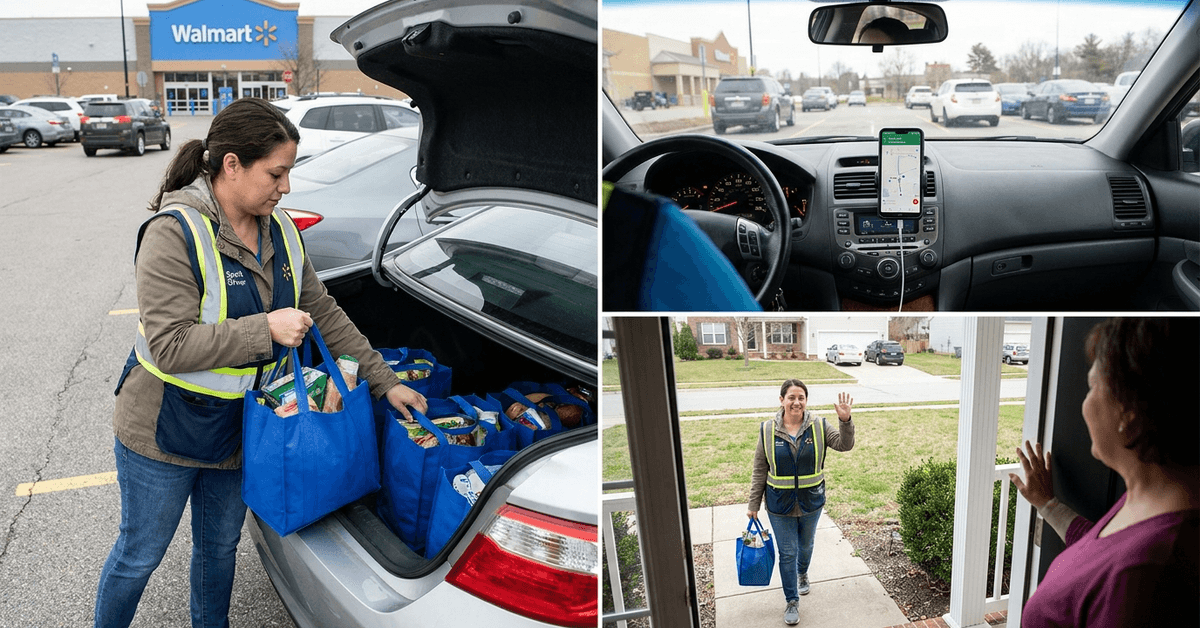
People imagine constant highway stretches. The actual experience is more fragmented. Shifts involve short local loops, frequent starts and stops, a fair amount of waiting at stores when orders aren’t ready, and unpredictable gaps between deliveries.
The typical workflow runs like this:
- Log into the app and monitor available orders
- Accept an order showing pickup location, estimated pay, and delivery address
- Drive to the designated Walmart store or pharmacy
- Give the order code to store staff, load the bags
- Follow app navigation to the customer’s address, scan barcodes or collect signatures as required
- Wait for the next order or log off
The waiting stretches are the part that doesn’t show up in earnings screenshots online.
Slow periods can run 20 to 40 minutes between orders depending on the time of day, your market, and how many other drivers are logged in nearby. That dead time is unpaid.
One Opinion That Might Be Unpopular
I genuinely disagree with the common advice that new Spark drivers should accept every order to build their rating quickly.
The accepted wisdom is that high acceptance rates unlock better order access. Accepting $8 deliveries to distant zip codes while burning $4 in gas to get there is not a strategy. It is a way to work for $4 an hour while your rating creeps up.
A smarter approach is learning your local market for the first two to three weeks before accepting everything. Watch what high-paying orders look like in your area.
Batch orders to nearby clusters, express deliveries under five miles, and weekend orders during peak windows are what you should be training your instincts toward, not filling your acceptance stats with breakeven runs.
The Walmart Spark Driver portal has specific information on how ratings work in your market, and it is worth reading before optimizing for the wrong metric.
Questions People Ask About Walmart Spark Driver
Q: How quickly do you get paid after completing deliveries? Spark pays weekly for standard transfers, though an instant cash-out option is available for a fee. Most drivers using the standard weekly payout see deposits within two business days of the week closing.
Q: Can you drive for Spark and DoorDash at the same time? Nothing in Spark’s contractor agreement prohibits working other platforms simultaneously. Many drivers run both apps open and alternate based on which offers the better order first. Just make sure you never accept two orders at once from different platforms.
Q: Does Spark work in rural areas? Coverage depends entirely on whether Walmart has partnered with a logistics provider in your region. Rural markets sometimes have less driver competition, which means higher acceptance rates for those logged in, but total order volume is lower.
Q: Are there vehicle restrictions for Spark? A standard passenger vehicle works for most orders. Larger batch deliveries occasionally require trunk or back-seat space for multiple bags. Drivers report that sedans handle most orders fine, though SUVs make loading easier during high-volume shifts.
Q: What happens if a customer isn’t home? Spark drivers follow the app’s instructions for unattended deliveries, which typically means leaving the order at the door with a photo confirmation. Prescription deliveries have stricter handoff requirements and may require a signature or return to the store.
Conclusion
Walmart Spark rewards drivers who treat it like a small business, not a casual app side hustle. Tracking your actual cost per mile changes what a “good” delivery looks like in practice.
The platform has real earning potential in the right market at the right time. Whether it becomes your primary gig income or a reliable supplement depends entirely on how systematically you approach the work.